Drone Laws in Tanzania. Filming on Kilimanjaro & other National Parks
Expert travel insights and safari tips for your Tanzania adventure with Juhudi Expedition.
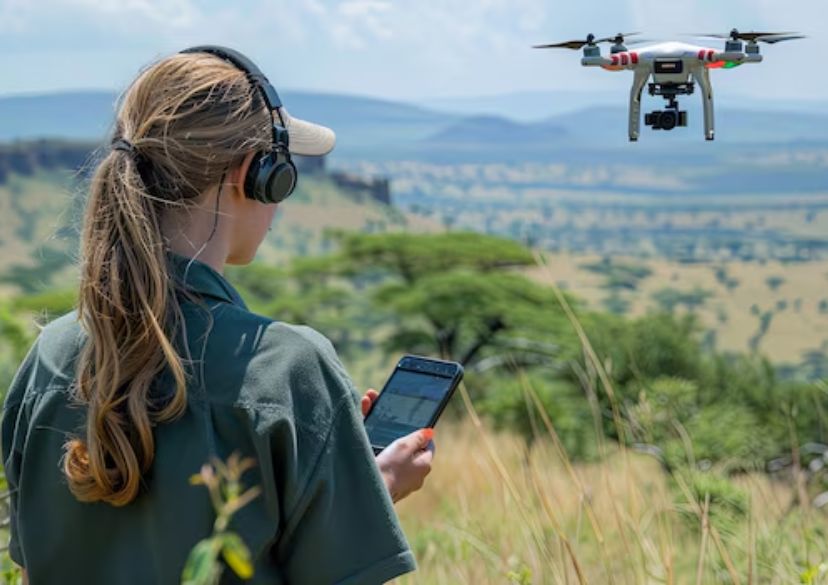
Comprehensive Guide to Drone Filming Laws and Regulations
in Tanzania
Tanzania’s diverse geography — from vast savannah ecosystems
and volcanic highlands to historic coastal cities and turquoise island
archipelagos — offers exceptional opportunities for aerial cinematography.
However, drone operations within Tanzanian airspace are strictly regulated. The
government maintains firm oversight to protect national security, aviation
safety, environmental conservation, and individual privacy.
While drone filming is legally permitted in Tanzania, it is
subject to a structured approval process involving multiple regulatory
authorities. Operators must obtain formal authorization before importing,
deploying, or flying any remotely piloted aircraft system (RPAS).
This guide outlines the legal framework, institutional
oversight, permit requirements, and operational obligations governing drone use
in Tanzania.
1. Legal and Regulatory Framework
Drone activities in Tanzania are governed under the Civil
Aviation (Remotely Piloted Aircraft Systems) Regulations, 2018. These
regulations fall under the authority of the Tanzania Civil Aviation Authority
(TCAA), which oversees all civil aviation matters in the country.
The TCAA’s responsibilities include:
- Classification
and registration of drones
- Issuance
of operational permits
- Approval
of flight plans
- Enforcement
of safety standards
- Monitoring
compliance with national airspace rules
The regulations categorize drones based on:
- Weight
and technical specifications
- Operational
purpose (recreational, private, commercial, research)
- Level
of operational risk
Each category carries specific documentation and compliance
requirements.
2. Multi-Agency Oversight for Filming Activities
Drone filming — particularly for commercial, documentary, or
broadcast purposes — requires coordination beyond the TCAA.
Depending on the scope and location of the operation,
approvals may also be required from:
- Ministry
of Defense and National Service – National security clearance
- Tanzania
Film Board – Filming authorization and content oversight
- Tanzania
National Parks Authority – Authorization for operations within protected
areas
- Local
municipal or regional administrative authorities (if operating in urban
centers)
This multi-layered approval structure reflects Tanzania’s
cautious and security-conscious approach to aerial operations.
3. Mandatory Permit Requirements
3.1 TCAA Operational Permit
All drone operators — whether Tanzanian citizens or foreign
nationals — must obtain prior authorization from the TCAA before operating a
drone.
The application typically requires:
- Operator’s
full name, nationality, and contact details
- Drone
make, model, serial number, and weight classification
- Technical
specifications (range, altitude capability, camera system)
- Purpose
of operation
- Exact
flight locations (GPS coordinates if possible)
- Proposed
altitude and duration of flights
- Proof
of pilot competence or certification (for commercial operators)
- Evidence
of third-party liability insurance (where applicable)
Operating without TCAA authorization constitutes a violation
of civil aviation law.
3.2 Special Requirements for Foreign Operators
Foreign nationals are subject to additional security vetting
procedures.
In addition to TCAA approval, foreign operators must obtain
clearance from the Ministry of Defense and National Service. This is due to
concerns regarding aerial surveillance, mapping of sensitive infrastructure,
and national security risks.
Foreign applicants are generally required to:
- Submit
a formal written application detailing the project scope
- Provide
a letter of invitation or partnership from a registered Tanzanian entity
- Share
passport details and travel itinerary
- Await
security clearance approval
Processing timelines vary but can extend several weeks.
Advance planning is essential.
Failure to secure proper authorization may result in:
- Immediate
confiscation of drone equipment
- Detention
or questioning
- Fines
or legal penalties
- Deportation
4. Drone Filming and Media Production Regulations
Aerial filming is considered a regulated commercial activity
in Tanzania.
Before conducting drone-based filming, operators must secure
approval from the Tanzania Film Board in addition to aviation clearance.
Applications must specify:
- Nature
of the production (documentary, commercial advertisement, tourism content,
research, etc.)
- Filming
locations and schedules
- Distribution
platforms (television, streaming platforms, social media, cinema release)
- Target
audience and intended countries of distribution
Authorities review content proposals to ensure compliance
with national image policies, environmental protection standards, and security
protocols.
Filming within protected areas such as Serengeti National
Park or Ngorongoro Conservation Area requires additional written permission
from the relevant conservation authorities. These areas have strict
environmental controls designed to protect wildlife habitats from disturbance.
5. Restricted and Prohibited Airspace
Tanzania designates several categories of restricted
airspace where drone operations are either prohibited or tightly controlled.
These typically include:
- Airports
and heliports (within a 3–5 km radius)
- Military
installations
- Government
buildings and the State House (Ikulu)
- Border
regions
- Strategic
infrastructure (power plants, communication towers)
- Wildlife
conservation zones (without authorization)
Even accidental entry into restricted airspace may result in
enforcement action. Operators are advised to consult official aeronautical
information or directly contact the TCAA prior to flight.
6. Operational Safety Standards
Approved drone operators must comply with strict operational
guidelines, including:
- Maximum
altitude limit of 400 feet (120 meters) above ground level
- Daylight-only
operations
- Continuous
visual line-of-sight control
- No
flights over crowds, public gatherings, or private property without
consent
- Avoidance
of adverse weather conditions
- Immediate
landing if aviation conflicts arise
Commercial operators may also be required to implement
documented safety procedures and risk mitigation plans.
7. Importation of Drones into Tanzania
Drone importation may require declaration upon entry at
Tanzanian airports. Customs authorities may request proof of TCAA authorization
before releasing drone equipment.
Arriving without prior approval can result in temporary
seizure of equipment pending permit verification.
8. Enforcement and Legal Consequences
Tanzania enforces drone regulations rigorously. Violations
can trigger:
- Confiscation
of equipment
- Administrative
fines
- Suspension
of filming activities
- Criminal
prosecution under aviation law
- Deportation
(for foreign nationals)
Authorities have previously taken enforcement action against
tourists and production crews operating drones without permits. Compliance is
strictly monitored.
9. Application Timeline and Best Practices
Operators are strongly advised to:
- Begin
the permit process at least 3–6 weeks before intended operations
- Provide
clear, detailed documentation
- Coordinate
with local partners familiar with regulatory procedures
- Avoid
last-minute applications
Engaging a local production facilitator can significantly
streamline the approval process.
Conclusion
Drone filming in Tanzania is legally permitted but subject
to comprehensive regulatory oversight. The country’s approach reflects a
balance between encouraging technological innovation and safeguarding national
interests, environmental integrity, and aviation safety.
For filmmakers, content creators, researchers, and
commercial operators, full compliance with Tanzanian regulations is not only a
legal obligation but also a professional responsibility.
With proper preparation, documentation, and respect for
local laws, drone operations in Tanzania can be conducted safely, legally, and
successfully.

