
Ngorongoro Crater National Park
Discover incredible wildlife, stunning landscapes, and unforgettable safari adventures in Ngorongoro Crater National Park.
Discover Ngorongoro Crater National Park
Ngorongoro
Crater, located in the northern Arusha Region of Tanzania, is the world’s
largest intact volcanic caldera. Formed about 2–3 million years ago when a
massive volcano collapsed, the crater spans approximately 260 square kilometers
(100 square miles) and is part of the Ngorongoro Conservation Area (NCA), a
UNESCO World Heritage Site.
This natural
wonder is unique because it combines wildlife conservation, Maasai culture, and
geological marvels in one protected area. Unlike other open plains, the crater
walls form a natural enclosure, making it easier for tourists to spot animals
in one location.
Geography
and Climate
- Caldera dimensions: About 20 km
across and 600–700 meters deep.
- Landscape: A mix of grasslands,
savannah, forests, swamps, and a soda lake (Lake Magadi) at the bottom.
- Climate:
- Wet season: November–May (best
for lush landscapes and bird watching)
- Dry season: June–October (best
for wildlife spotting as animals gather around waterholes)
- Altitude: The crater floor sits
at around 1,800 meters (5,900 feet) above sea level, while the rim reaches
up to 2,400 meters.
Wildlife
Ngorongoro
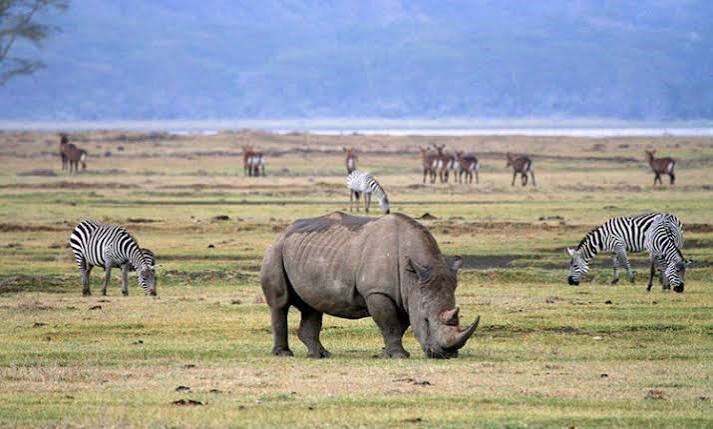
Crater is often called “Africa’s Garden of Eden” due to its dense wildlife
population. About 25,000 large animals live in the crater, including:
- Big Five: Lion, leopard,
elephant, buffalo, and black rhino.
- Other mammals: Cheetahs, hyenas,
zebras, wildebeests, hippos, warthogs, gazelles, and jackals.
- Birds: Flamingos (especially on
Lake Magadi), ostriches, crowned cranes, and over 500 bird species.
The crater
is one of the few places where you can see endangered black rhinos in the wild
without a guided trek through dense forests.
Cultural and
Historical Significance
- The Maasai people have lived in
the Ngorongoro area for centuries and practice pastoralism (raising
cattle). They coexist with wildlife, grazing their herds outside the
crater but sometimes visiting the lower regions.
- Fossil-rich Olduvai Gorge,
located nearby, has revealed evidence of early human ancestors, including
Homo habilis and Homo erectus, making the area a key anthropological site.
Interesting Facts
- The crater has never been hunted,
so wildlife is abundant.
- It is sometimes called “the
eighth wonder of the world” for its unique ecosystem.
- The combination of volcanic
soil, permanent water sources, and protected status supports a rich and
dense population of animals.
- Visitors can drive from the rim
to the crater floor in about 30 minutes, offering one of the easiest
safari experiences in Africa.
Experience the incredible wildlife diversity and stunning landscapes of Ngorongoro Crater National Park. Our expert-guided safari tours and trekking adventures offer unforgettable encounters with Tanzania's most spectacular natural wonders.


Popular Safari Tours in Ngorongoro Crater National Park
Experience the best of Ngorongoro Crater with our expert-guided safari tours featuring incredible wildlife encounters and stunning landscapes.


Popular Trekking Tours in Ngorongoro Crater National Park
Discover the natural beauty of Ngorongoro Crater through our guided trekking adventures and mountain climbing experiences.


Popular Day Tours in Ngorongoro Crater National Park
Explore Ngorongoro Crater with our convenient day tour options, perfect for wildlife viewing and cultural experiences.